How technical change requests in industrial manufacturing can be digitally captured and evaluated.
The costs associated with a product change rarely stem from the change itself. They arise from incomplete assessments, a lack of transparency and consequences that are identified too late.
Hidden additional costs, delayed deadlines, resource bottlenecks and misguided investments often place a significantly greater burden on the company than anticipated. A structured change process enables you to reduce these risks in the long term.
In industrial production, manufacturing processes must be continuously adapted to new product requirements.
Change triggers can include technical issues, customer complaints, market changes, optimizations, or innovations.
The impact of changes to workflows, materials, equipment, or technology is often not fully predictable in advance.
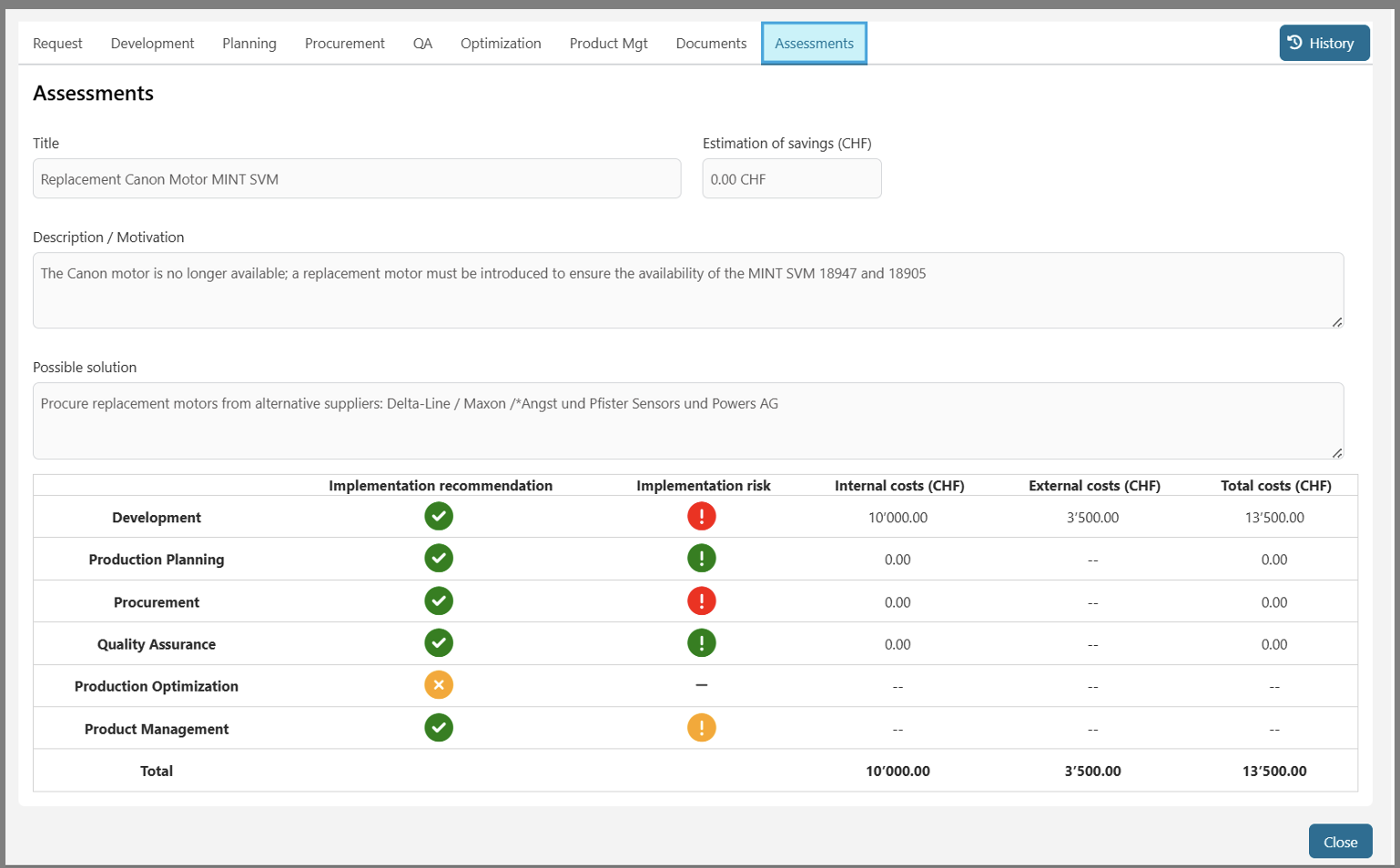
Technical and organizational feasibility, as well as risks and cost implications, are often not sufficiently assessed.
Implementation issues are frequently identified too late, leading to negative effects on project timelines.
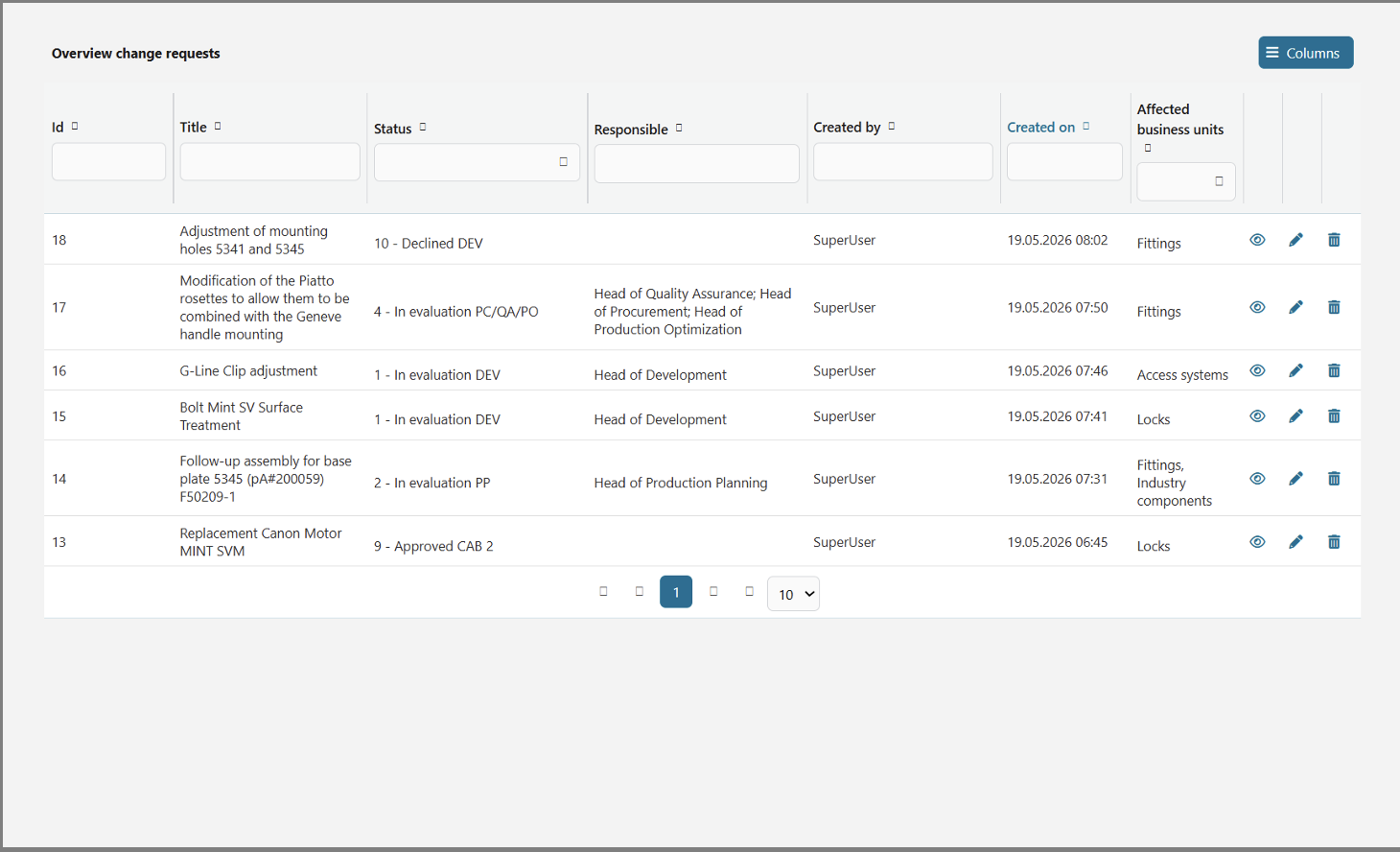
Coordination and communication between stakeholders is inefficient and error-prone, due to the lack of a consistent end-to-end process supported by a central system.
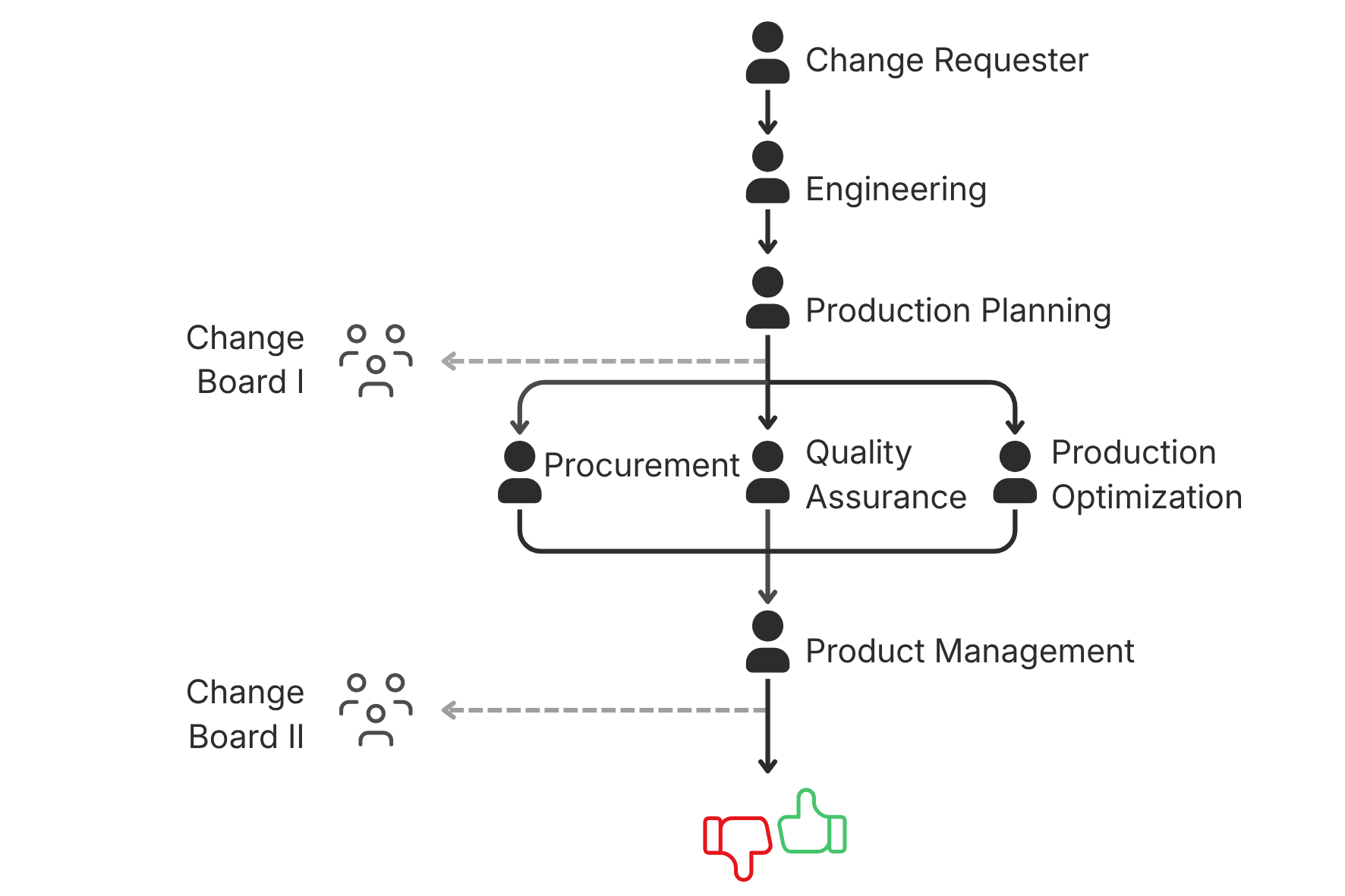
Technical changes in manufacturing rarely affect only a single step. They impact multiple areas, systems, and decisions.
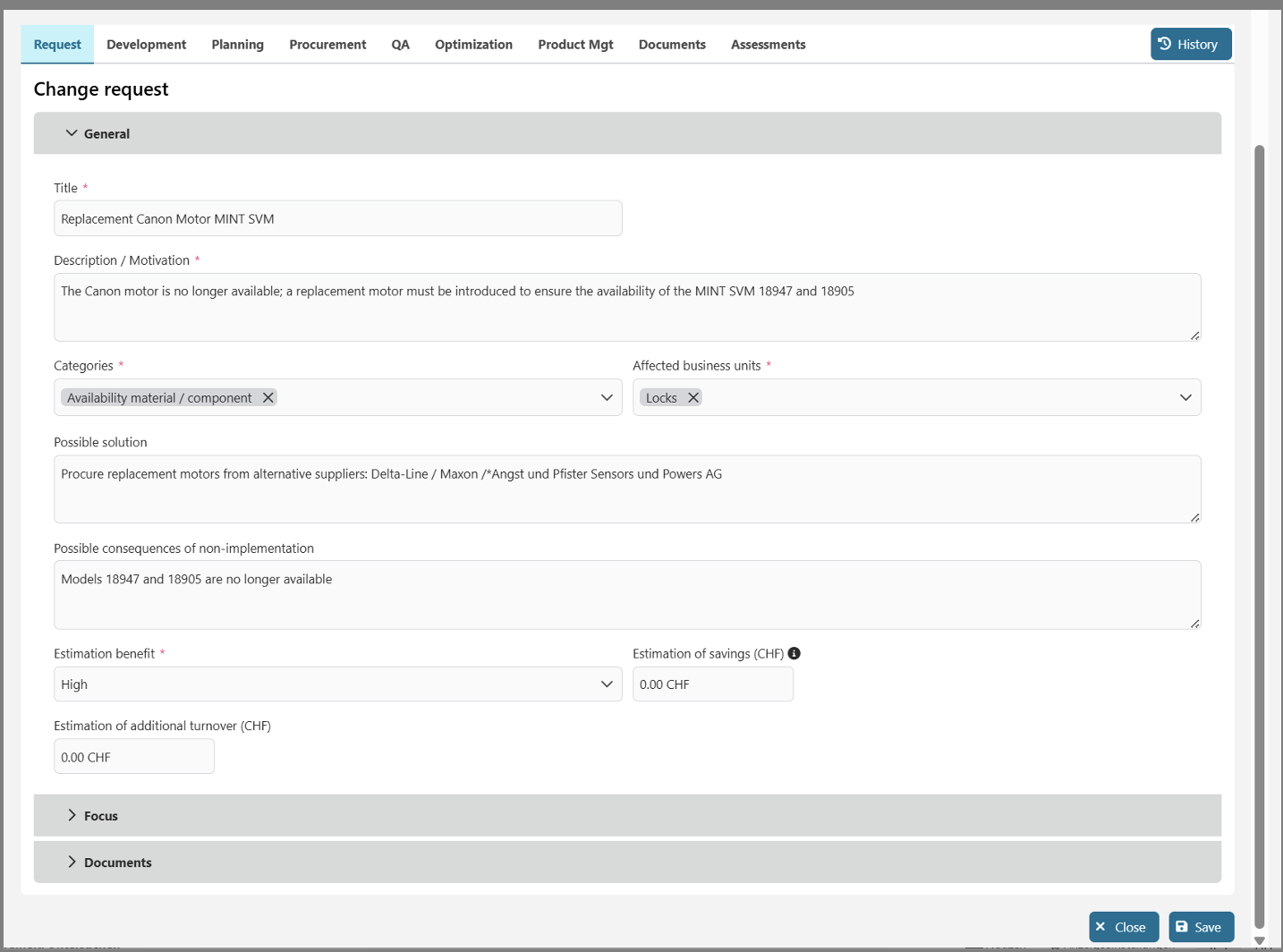
What needs to be adapted – process, procedure, equipment, material, or technology?
Which roles, teams, or departments are involved or affected?
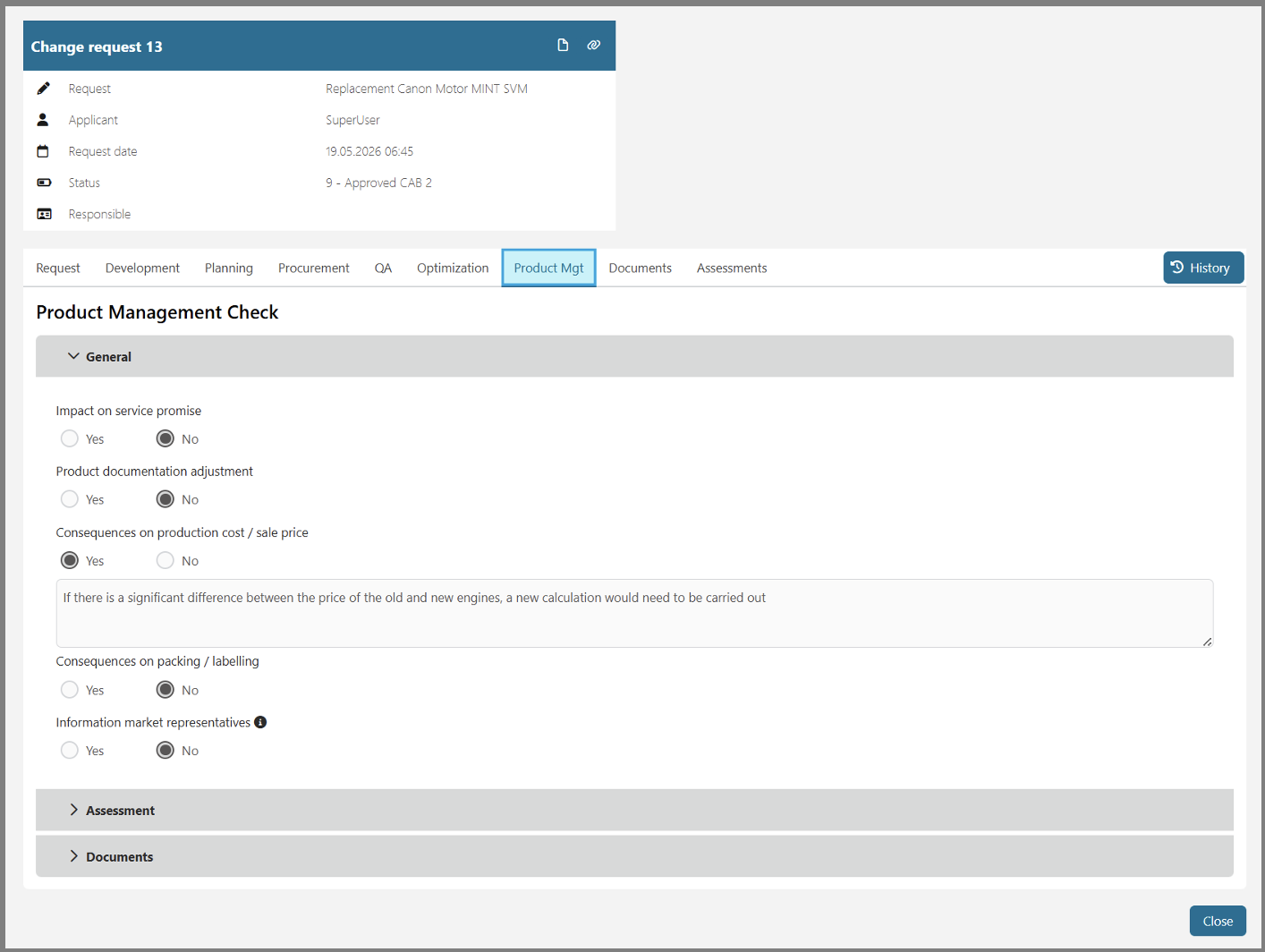
How does the change affect other process areas or the product portfolio for existing customers?
What impact is expected on material procurement?
What costs arise, and what concrete benefits are expected?
What risks exist, and how can they be mitigated or reduced?
Which products, components, or bills of materials are affected?
How feasible is the implementation from a technical perspective?
By when should the change be implemented, and how long will execution take?
How sustainable is the proposed solution?
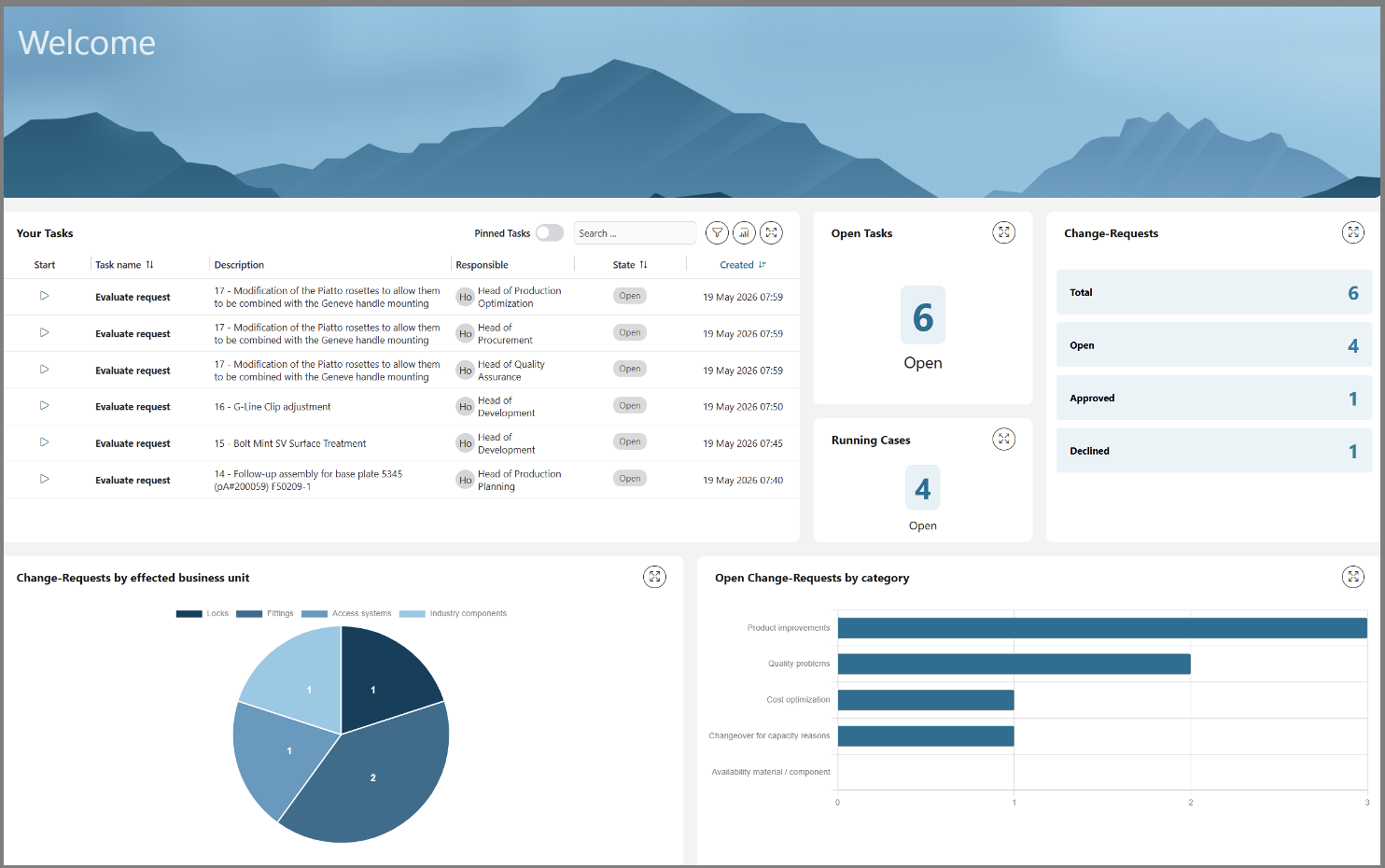
Control: Better governance through a central overview of all change requests
Standardised Process: Improved management thanks to a central overview of current applications
Transparency: Full visibility for all stakeholders and reduced communication effort
Speed: Faster decision-making and shorter lead times
Feasibility: Early identification of implementation feasibility before execution
Traceability: Structured and transparent evaluations and decisions
Impact: Reduced unforeseen impacts and cost effects
Performance Measurement: Basis for cost reduction and revenue improvement
Customer Satisfaction: Fewer complaints and improved quality
A real-world business case shows the cost impact of a poorly coordinated change request process. Different root causes can lead to a wide range of direct and indirect consequences.
Investing in a systematic, standardized, and digitally supported change process pays off in every case.
Return on Investment (ROI): 6–12 Months
Let’s talk.
We support you in process optimization and develop tailored solutions based on your needs.
Dr. Hanspeter Seiler
Head of Digitalization
FROX AG