<img height="1" width="1" style="display:none" src="https://www.facebook.com/tr?id=2592941450723103&amp;ev=PageView&amp;noscript=1">
Get in touch
Process orchestration: Centrally manage end-to-end workflows

Process Orchestration: Manage End-to-End Processes Centrally

Your systems work. Just not always together.
While process automation focuses on individual tasks, process orchestration coordinates systems, people and AI across the entire end-to-end process.

What Is Process Orchestration?

Process orchestration is the coordinated execution of an end-to-end business workflow across applications, people, and AI. An orchestration engine manages the sequence of tasks, decisions, and handoffs using a defined process model.

Axon Ivy provides this orchestration layer across your existing systems. Your applications perform their functions while the engine tracks how the complete process progresses.

Core Principles

  • Connect applications within a shared workflow.
  • Define task routing and decision logic.
  • Coordinate the complete end-to-end process.
  • Track status and exceptions.
  • Assign ownership across system boundaries.

When Do You Need Process Orchestration?

Process orchestration is useful when a business workflow spans multiple applications and requires coordinated tasks, approvals, and decisions.

For example, employee onboarding may involve HR records, manager approvals, and IT service requests. Automating an activity within one application does not define how the full onboarding workflow progresses.

An orchestration engine coordinates these handoffs and maintains visibility into the overall process.

What Does Process Orchestration Do?

Process orchestration combines system integration with workflow execution, task routing, and process monitoring. These capabilities coordinate how work moves across applications and participants.
  • System integration: Connect data and applications through interfaces.
  • Workflow execution: Coordinate tasks, rules, and decisions centrally.
  • Task routing: Assign work to people, applications, or AI services.
  • Process visibility: Track status, responsibility, and exceptions.

Why Do Processes Break Down Between Systems?

When applications manage separate parts of a workflow, the handoffs between them may depend on employees passing information, reconciling records, and following up on approvals.

Without defined coordination across applications, you can encounter:

  • Interrupted workflows at system boundaries
  • Decisions based on incomplete information
  • Manual follow-up between process steps
  • Unclear ownership of the overall outcome
  • Limited visibility into process progress

From Isolated Solutions to End-to-End Processes

An orchestration layer manages the sequence of activities, decisions, and handoffs across applications. It defines who acts next, what information is needed, and how exceptions are handled.

Axon Ivy connects your existing systems, people, and AI through a shared process model. Your applications continue to perform their functions while the engine coordinates the complete workflow.

How Does Process Orchestration Work?

Process orchestration works by executing a process model that defines tasks, decisions, participants, and system interactions. The orchestration engine manages the sequence and tracks progress across the complete workflow.

  1. Start the process: An incoming document, service request, or system event triggers the workflow.
  2. Execute the model: The engine determines which activity or decision comes next.
  3. Assign work: Tasks are routed to applications, people, or AI services.
  4. Connect systems: Interfaces integrate enterprise resource planning (ERP), customer relationship management (CRM), and document management systems.
  5. Apply decisions: Rules and business data determine the next step.
  6. Track execution: Process status, responsibility, and exceptions remain visible.

Your existing applications perform their functions while the orchestration engine coordinates the end-to-end process.

Example: From an Email to a Completed Workflow

A customer emails an invoice or service request. AI identifies the document type and extracts relevant information.

The Axon Ivy Orchestration Engine routes the extracted data to the appropriate systems, assigns a reviewer when needed, and coordinates the remaining process steps.

The workflow remains centrally managed from message intake through final processing. AI extraction is one activity within the larger business process.

Explore the Axon Ivy Smart Mailroom Solution

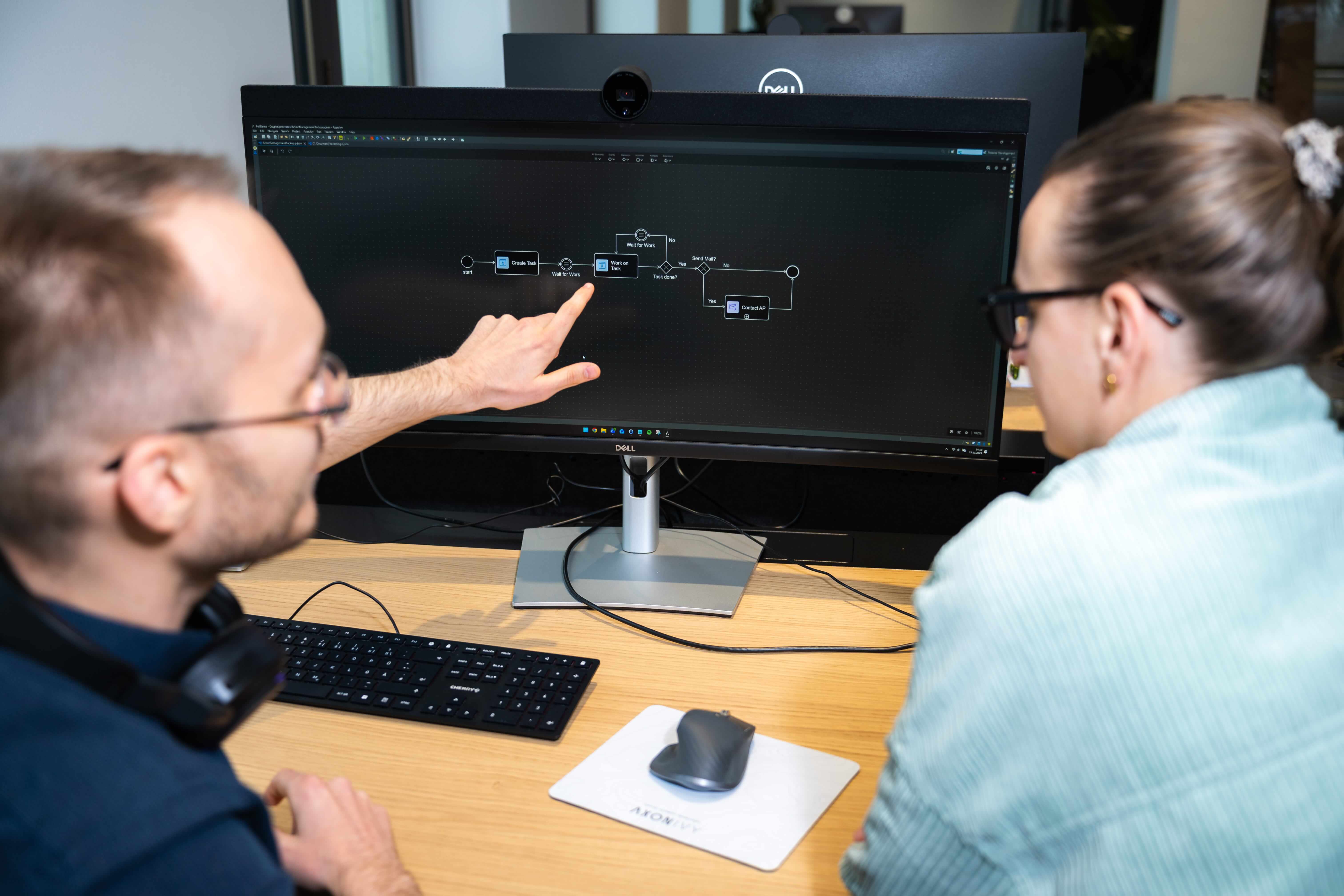
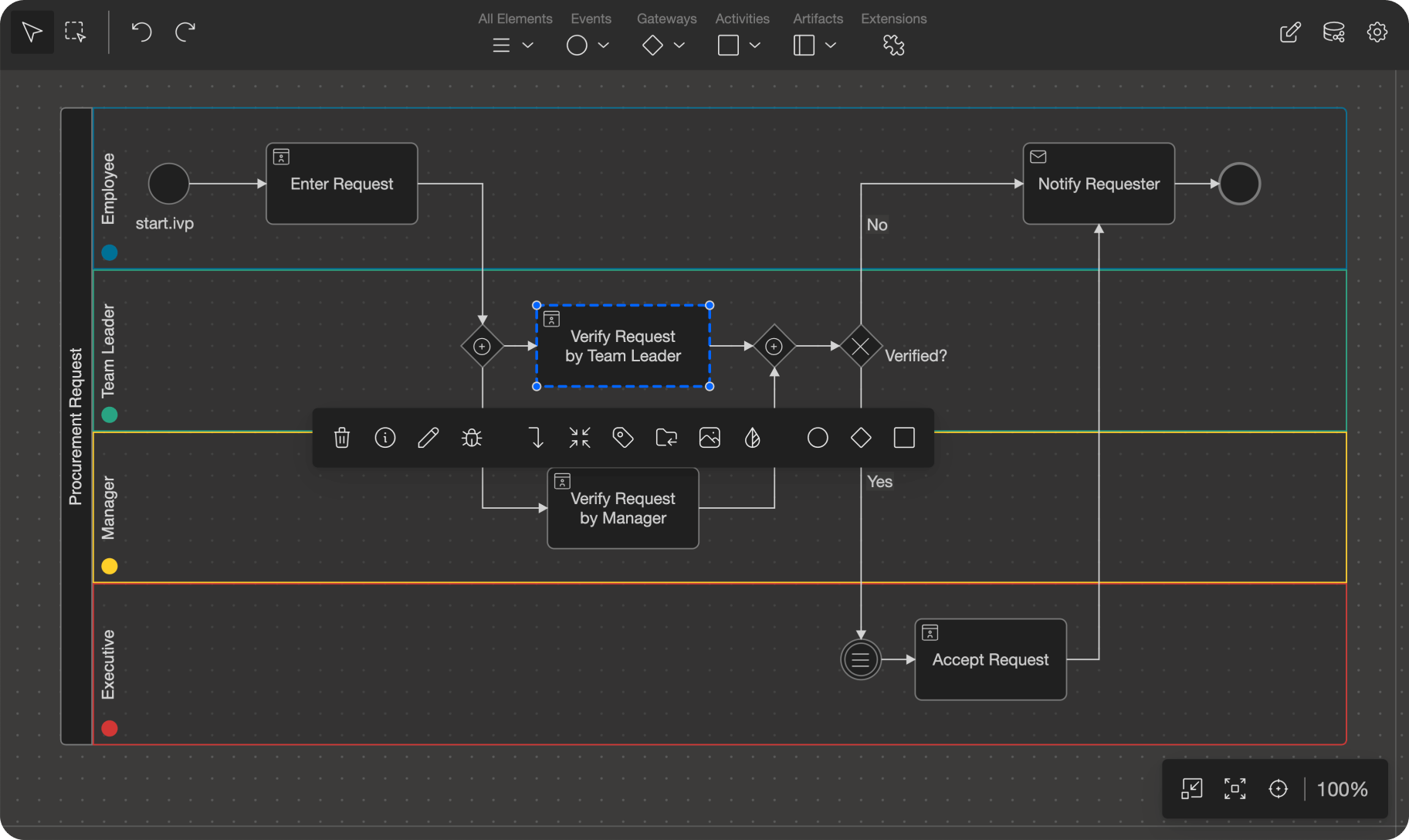
BPMN process model in the Axon Ivy Designer

How Does BPMN Support Process Orchestration?

BPMN stands for Business Process Model and Notation. It is a standard for representing business workflows visually, including activities, events, and decision points.

In Axon Ivy, the orchestration engine executes BPMN process models to coordinate human tasks, system interactions, and AI activities.

The model describes how the workflow progresses; the engine manages its execution. Your business teams and IT can use the same model to discuss responsibilities, decisions, and process changes.

Process Automation vs. Process Orchestration

Process automation illustration

Process Automation

Process automation executes a defined task or sequence of tasks automatically.

  • Streamlines individual activities
  • Often operates within a specific application
  • Reduces manual work within those activities

Continuous process orchestration loop

Process Orchestration

Process orchestration coordinates automated and human activities across a complete business workflow.

  • Manages end-to-end execution
  • Connects applications, people, and AI
  • Coordinates decisions and handoffs across systems
  • Maintains visibility and process ownership

Why Are Individual Tools Not Enough?

Specialized tools manage individual business functions. Cross-system workflows also need coordinated handoffs, approvals, and ownership.

Applicant tracking, invoice processing, and IT service management tools each address a specific need. If one process uses several of these tools, orchestration defines how their activities fit together.

  • Route the output of one activity to the next.
  • Assign responsibility for each handoff.
  • Track progress across the complete workflow.

System Integration vs. Process Orchestration

System integration exchanges data between applications. Process orchestration manages the sequence of work that uses those applications.

Connected systems still require process-level decisions:

  • Who acts next?
  • Which approval is required?
  • Which deadline applies?
  • Who owns the outcome?

Axon Ivy provides a central orchestration layer to coordinate these responsibilities alongside your existing applications.

How Does AI Fit Into Process Orchestration?

AI supports selected activities within a process; the orchestration engine coordinates the complete workflow. For example, AI can extract invoice data while the process model defines routing, review, and the next system interaction.

  • Use AI to classify incoming documents and extract information.
  • Deliver AI results to subsequent process steps.
  • Provide process context for AI-supported decisions.
  • Coordinate AI activities with applications and human tasks.
  • Keep AI activities within a defined, monitored workflow.

How Does Process Orchestration Support Governance?

Process orchestration supports governance by documenting and monitoring decisions, responsibilities, and exceptions. This record helps you review how a workflow progressed and where intervention was required.

Traceability supports audit preparation and risk management. Meeting a particular compliance requirement also depends on your process design, configuration, and organizational controls.

What Are the Benefits of Process Orchestration?

A process orchestration platform provides shared control and visibility across a complete business workflow. With Axon Ivy, you can coordinate activities across applications and participants while retaining your existing systems.

  • Coordinate end-to-end workflows across applications.
  • Track activities across systems, people, and AI.
  • Reduce manual coordination between process steps.
  • Define ownership across departments.
  • Continue using your existing business systems.
  • Integrate AI within defined workflows.
  • Monitor decisions and exceptions for governance.
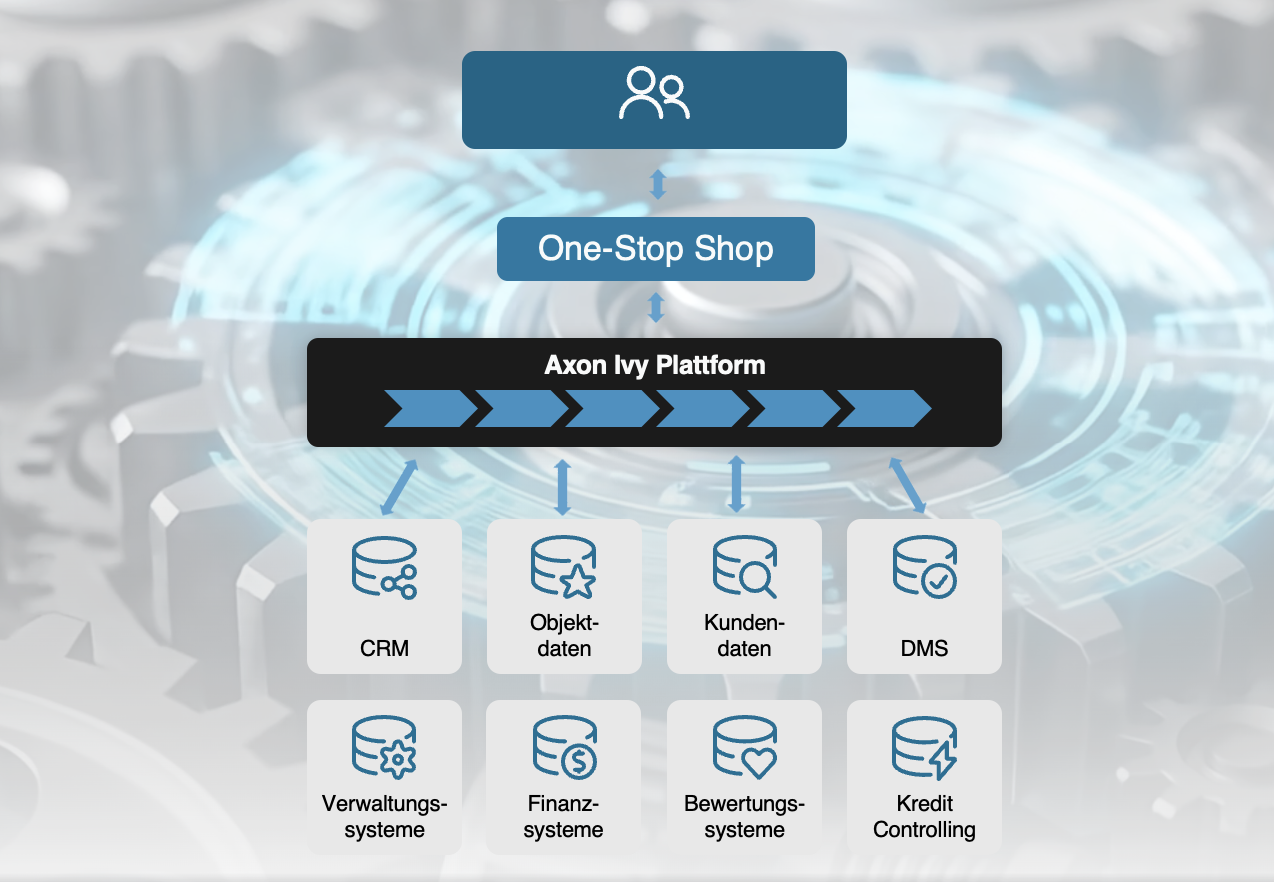
Axon Ivy connects your existing systems

Connect Your Systems With Axon Ivy

Axon Ivy is a process orchestration platform that connects business applications, human tasks, and AI activities in a centrally managed workflow.

See how the orchestration engine coordinates decisions and handoffs across your existing systems in a live demo.

Discuss Your Process Orchestration Needs

Tell us which applications, people, and decisions your workflow involves. In a demo, we will explore how Axon Ivy can coordinate those steps, integrate your existing systems, and manage AI activities within the process.